I’m Zewei Liu, studying MA Creativity at the Humanities School.I completed my undergraduate studies in China and Sweden. My undergraduate major is engineering management. Because of my hobby of photography, I became a photographer during university.I have extensive experience in commercial and art photography. Because of my interest in the media,I have rich online media management and event planning experience.
The reason I chose this course is that I have realized the necessity of digital business technology in the realization of ideas, and it will have a lot of application space in future business work.
This is my retrospective article about the BEMM129 Digital Business Mode. I will give feedback based on my learning experience.
My course of study
The main reason for choosing this course is that I realized that the digital business model has been widely used in global activities, and its significance in the business field will continue to deepen.
My main course is creativity, which is different from business, but if you want to complete an excellent creative plan, you can not do without commercial support. At present, in the creative field, more and more companies and artists are also use digital business models to assist their work and help them get paid. Netflix and Spotify are two very successful examples.
After studying the whole course, I think that understanding of digital business models will be of great help to my creative work afterwards. In fact, I have used them in the process of my internship application. Digital business models assist me to go to the employer show me what I think.
About blog
I have had some experience writing personal blogs before.but exploring blog writing in a more academic way is a new attempt for me.
My experience in writing a blog is that if I want to tell a situation or thing clearly, first of all I need to have an in-depth understanding of it, and I need to prepare enough information. Secondly, I need to express ideas in the most direct way. The language should not be too academic, and it must not lack professionalism.
In addition, I can use the comment function of the blog to communicate with anyone who is interested in the topic of the article, to answer the doubts of others, or to provide me with new inspiration.
About online learning
First of all, the time for online learning is relatively free, and I can freely choose when to have class and consult materials. I usually go to bed late. If a class is scheduled in the morning, it will make me feel difficult. But using mooc will not have such a problem. I can learn any time I want to participate in the course. Second, I can watch the same course and article repeatedly, and I do not have to worry about whether I will forget or miss any information.
Future thinking
We are now facing a special period due to COVID-19. People can not normally participate in face-to-face business activities because of isolation. Digital business models can play a very active role at this time. We can find that companies with digital business models will perform better when faced with such situations (for example Amazon and Ocado).
Here is my review video:
Reference
Christensen, G. , Steinmetz, A. , Alcorn, B. , Bennett, A. , Woods, D. , & Emanuel, E. . (0). The mooc phenomenon: who takes massive open online courses and why?. Social Science Electronic Publishing.
Markides C. (2010). Creativity is not enough: how to create new market space through business-model innivation.
Raouf Naggar. (2015). The creativity canvas: a business model for knowledge and idea management. British Journal of Psychiatry the Journal of Mental Science,157(12), 860-864.
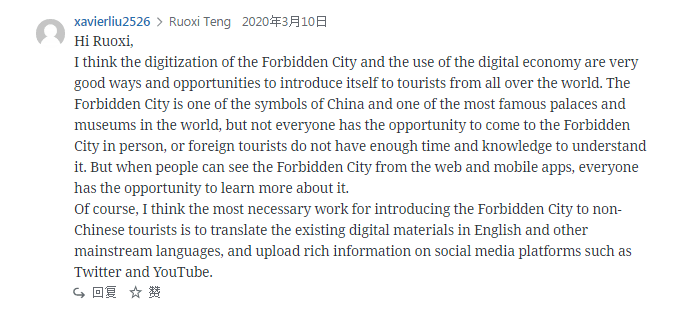
The Forbidden City is a representative element of Chinese traditional culture and an important cultural heritage. Every year, tens of millions of tourists visit the Forbidden City. Due to complex management systems and outdated operating models, the experience of visiting the Forbidden City has not been excellent. After using the digital business model, the image of the Forbidden City have basically been updated in all directions. This blog will analyze the exciting cooperation between the traditional Forbidden City and modern digital commerce from the perspective of ticket purchase and using of new media.
Ticket sales
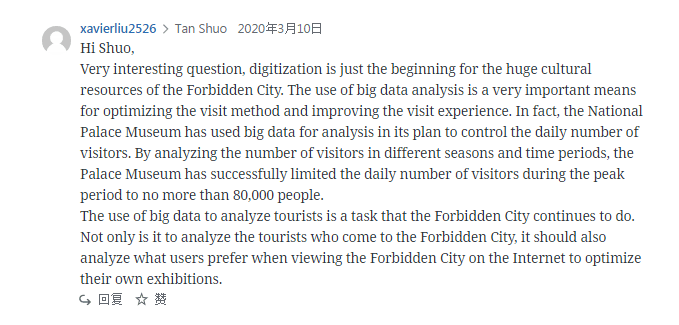
The Palace Museum visited more than 15 million people in 2012, making it the most visited museum in the world each year. In the past, the ticket sales in the Forbidden City were mainly based on queuing tickets on the spot, and visitors often experienced poor experiences because of long queues. In 2014, the Forbidden City tried to implement reservation booking on the entire network, which was only used by 2% of people at the beginning. Until the popularity of mobile payments in the following years, the Palace Museum took advantage of this opportunity to increase the proportion of online ticket purchases year by year. In order to solve the problem of a large number of tourists queuing for tickets, the Forbidden City allows WeChat and Alipay ports to purchase tickets. At present, the online ticket purchase rate of the Forbidden City tickets exceeds 75%.
The Palace Museum provides audiences with as many ticket purchasing channels as possible through the establishment of ticket purchasing websites and the production of mobile apps. Ticketing at the Forbidden City has become more time-saving and convenient, and the Palace Museum has used online ticketing to arrange visits, which greatly improves the visit experience and security. The National Palace Museum is gradually reducing or even canceling on-site ticket sales.
New media
Since 2012, the Forbidden City has begun new media operations, and the Forbidden City has begun publishing relevant information and presenting exhibits on Sina Weibo. The use of the history of digital business science for the Forbidden City not only allows the audience to understand some unusual collections every day, but also allows the audience to have a good impression of the Forbidden City. As of now, the number of Weibo fans on the Palace Museum has reached more than 3 million. Then in 2014, the official WeChat account of the Palace Museum-“Tiny Palace” was officially launched. The Palace Museum uses social media to show audiences the collections in the Palace Museum quickly and easily.
In order to allow the public to better understand the information of the collection and the stories behind it, the Palace Museum developed the first app in 2013, “The Beauty Map”. The Palace Museum used digital technology to create a popular science platform to allow audiences to get closer And appreciate the Forbidden City culture. According to data statistics, two weeks after its launch, the “The Beauty Map” was downloaded more than 200,000, and was awarded the “2013 Best App of the Year” by Apple. In the next few years, the Palace Museum successively launched 7 apps, which added more interactive experiences and fun based on appreciation and education. They integrate the cultural resources of the Forbidden City’s collections, architecture, exhibitions, academics, etc., and create a completely new museum interactive experience for the audience. The performance of “Daily Forbidden City” is particularly outstanding. It achieved 16th place in the iOS life list, and the overall list entered the Top200, which was also a great success.
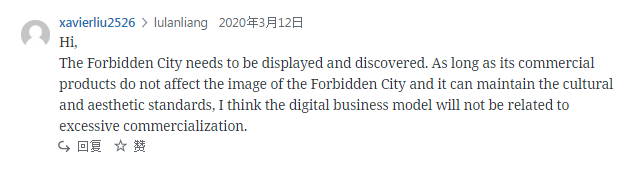
In 2017, the Palace Museum and Tencent jointly announced the establishment of the “Forbidden City Museum-Tencent Group Joint Innovation Lab”. In cooperation with Tencent, the Forbidden City can use technology advantages to let the antiquities of the Palace Museum enter the lives of ordinary people, which can make the Palace Museum more direct Communicate with people. At the same time, Tencent’s influence among youth groups has also helped the Palace Museum better understand the youth’s psychology, which helps the Palace Museum to launch products that better meet their needs and enter the public vision with a younger look. Being able to capture the mental state of the masses and complete self-expression for them is an important way to win online resonance. Understanding young people’s psychology and Internet culture is an important reason why the Forbidden City has attracted attention in new media channels.
In essence, the digitization of cultural heritage and new media marketing are still telling past stories in a new way, based on understanding people’s needs, conveying constant cultural connotations. The younger generation has gradually become the main crowd to visit cultural venues. They like to pay attention to the trendy and hot phenomenon on social media. Traditional cultural products need to be combined with modern media products to be more easily accepted.
Reference article
A Summary of the Digital Construction Concepts and Practices of Museums–Taking the Digital Palace Museum as an Example
Bearman, D., & Geber, K. (2008). Transforming cultural heritage institutions through new media. Museum Management and Curatorship, 23(4), 385-399.
Kalay, Y., Kvan, T., & Affleck, J. (Eds.). (2007). New heritage: New media and cultural heritage. Routledge.
Proctor, N. (2010). Digital: Museum as platform, curator as champion, in the age of social media. Curator: The Museum Journal, 53(1), 35-43.
Russo, A. (2012). The rise of the ‘media museum. Heritage and social media: Understanding heritage in a participatory culture, 145-157.
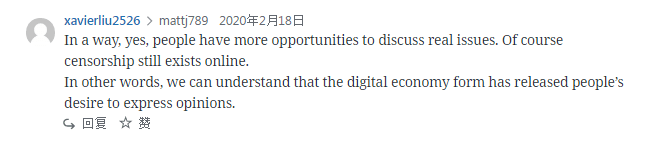
Digital technology has fundamentally changed the way of life of Chinese people. The new form of digital economy also requires the media industry to reformulate effective information usage methods to attract their users. And media companies must act quickly because the digital media economy has become the mainstream of the media industry, and it continues to grow at a rapid rate.
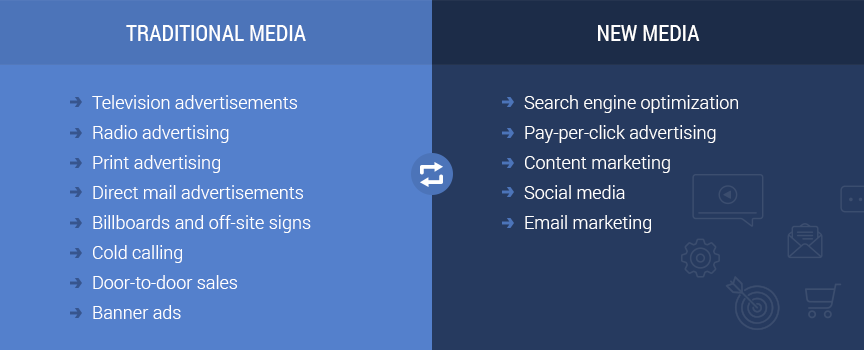
Here is a video comparing new media with traditional media:
From:WebFx
Three significant changes have occurred in the field of media combined with the digital economy in China:
First, the source of news has changed from a professional organization to every individual. In the past, when an emergency occurred, a professional media reporter would report and release the first time.These professional media platforms are news sources,but now everyone can become a news source and everyone can participate in the release of information in China. People use social platforms such as WeChat and Weibo, and the information posted on them will soon be disseminated, and then the professional media will follow the report.
In China, the widespread use of social media is gradually depriving traditional media of monopoly over public discourse. On the positive side, the relatively high degree of freedom from the media allows new information to appear in public media, which is unable to find in traditional media. (Tong and Sparks 2009; Yang 2009; Xin 2010; Xiao 2011). The extensive use of self-media has also eased that some news in China is too sensitive to be released on traditional media in a timely manner. Journalists now have to compete with new media with more professional perspectives and deeper content.
Second, restrictions on content access are reduced. In the past, whether people read a newspaper, a radio or television program, there were border restrictions. Newspapers have limited number of pages, and radio and television are broadcast only during specific time periods. However, now that mobile phones can be used to receive information anytime and anywhere. People no longer have restrictions on access to content, and the restrictions on the distribution of information and advertising in the media industry have also decreased. More and more advertisers are finding digital media more attractive than traditional media.
Third,the repetition of information is increased. Traditional media are limited by information boundaries. In order to avoid publishing too much of the same information at the same time, they will filter the information and publish it. Each media will guarantee its own personality.But New media is the opposite. Because there are no boundaries, a large number of similar or similar media platforms are active at the same time. When a news item appears, they will try to push all kinds of information in order to ensure that their platform information is timely. Therefore, a user often receives same message on different platforms.
Mobile phones and computers are widely and widely used in China. They allow people to easily view media messages and participate in and share information. Due to the increase in network speed and better file sharing technology, media publishing news in the form of video has become a feasible method. Video not only improves the receiving efficiency of users, but also increases the richness of information. As never before, video has become a very important method in media operations and news release.
The traditional media industry represented by newspapers is suffering a huge impact.In the last couple of years, this growth has halted for most titles: overall circulation is declining and the share of advertising expenditure going to the press has begun to fall (General Administration of Press and Publication (GAPP) 2005–2015; WARC 2014) .Since 2012, the total circulation of newspapers has been accelerating, especially in business newspapers. The overall circulation of Chinese newspapers fell by almost 11% in 2013 and by 25% in 2014.
The newspaper industry is facing tremendous pressure from the emerging economy. In order to remain competitive, many newspaper companies have readjusted their reporting strategies. A large number of traditional media practitioners leave traditional media to enter online media or become self-media producer.
At present, China’s digital media form has entered a relatively mature stage, and large-scale network media operators have monopolized most of the media traffic. But the media industry is still advancing due to the development of digital technology.
Next, the media will begin to apply the next-generation Internet based on IPV6 and 5G. Its time period is from 2017 to 2030. The next generation Internet has many exciting technologies that can be applied in the media field, including IPV6, cloud computing, big data, Internet of Things, artificial intelligence, virtual reality, quantum communication, and other aspects.Big data media can more accurately distribute information and advertising, and artificial intelligence media companies can complete more interactions with users, and virtual reality may completely change the way the media releases information.
Technology changes sometimes faster than information can be generated.
References
Keane, M. (n.d.). China’s digital media industries and the challenge of overseas markets. JOURNAL OF CHINESE CINEMAS.
Li, K., & Sparks, C. (2018). Chinese Newspapers and Investigative Reporting in the New Media Age. Journalism Studies, 19(3), 415–431.
Michael, D. C., & Zhou, Y. (2011). Understand and Tap Into China’s Digital Generations. China Business Review, 38(1), 22–26.
New Media Blue Book: China New Media Development Report (2019)
Ronald J. Deibert. (2019). The Road to Digital Unfreedom: Three Painful Truths About Social Media. 30(1), 25–39.
Vukanovic, Z. (2009). Global paradigm shift: Strategic management of new and digital media in new and digital economics. The International Journal on Media Management, 11(2), 81-90.wer











 Zewei Liu Blog